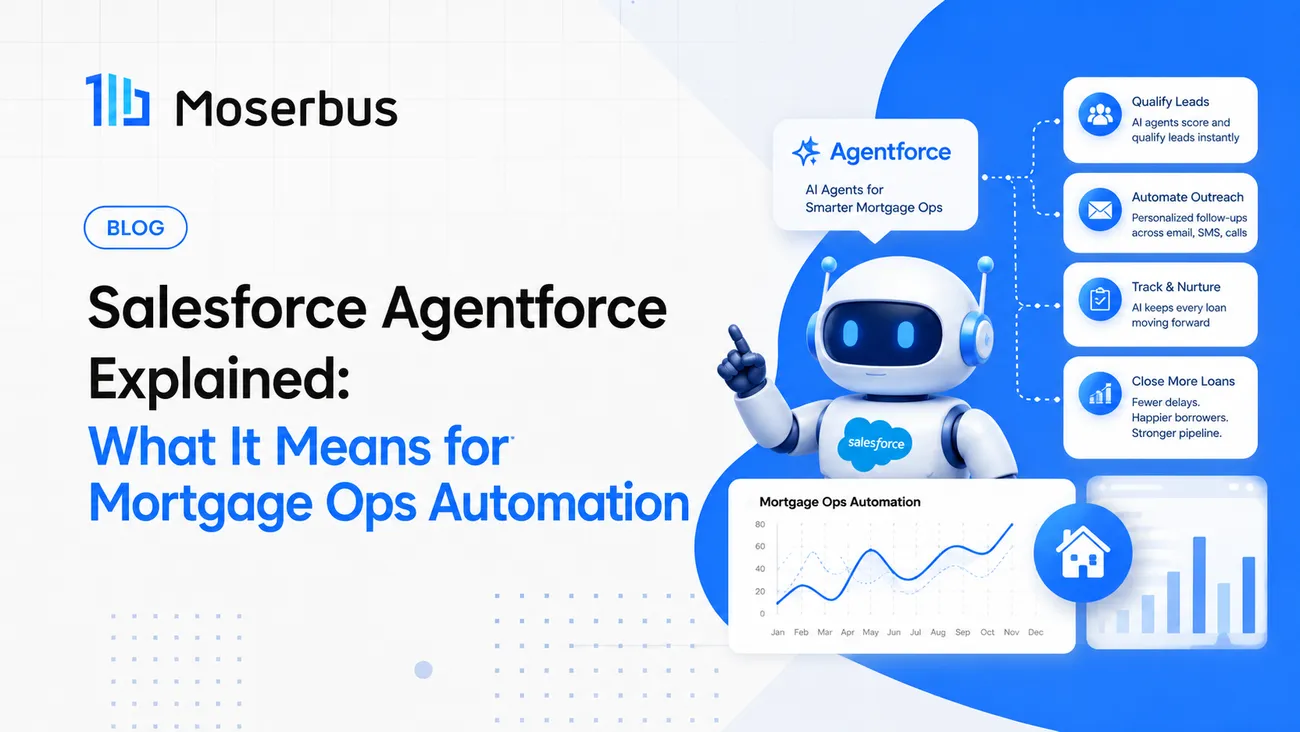
Salesforce Agentforce Explained: What It Means for Mortgage Ops Automation
Salesforce Agentforce is closing in on $800M in annual recurring revenue two years after launch, and it's putting AI agents (not chatbots, not workflow rules, actual task-completing agents) inside the CRMs banks and large lenders already run on. This post breaks down what Salesforce Agentforce actually does, where it shows up in mortgage ops specifically (document chasing, condition clearing, borrower follow-up), and why it matters even if your brokerage will never touch a Salesforce Financial Services Cloud contract.
It also lays out a practical checklist for deciding whether any mortgage CRM software, including the one you're already paying for, is actually agent-ready or just running old-school workflow automation with better marketing. Brokers looking for agentic AI without the enterprise price tag get a direct look at how MoserBus's AI Chatbot and Automation Builder deliver the same core capability.
Salesforce told investors that Agentforce, a platform that's barely two years old, had already closed 29,000 deals and crossed $800 million in annual recurring revenue by early 2026. That's not a pilot program anyone's still testing. That's a shift in what CRM software is expected to do, and it's happening inside the systems that a good chunk of banks, credit unions, and large mortgage lenders already run on.
If you're a loan officer, broker, or ops lead who's never logged into Salesforce, this can feel like someone else's news. It isn't. Agentforce is a preview of what every CRM buyer, including mortgage-specific ones, will start expecting as the baseline within a couple of years. Here's what Salesforce Agentforce actually is, what it looks like applied to mortgage ops automation, and what to check for if you're not planning to migrate to an enterprise Salesforce contract anytime soon.
What Salesforce Agentforce Actually Is
Salesforce Agentforce is an AI agent platform built into the Salesforce ecosystem that lets a company create agents capable of completing an entire task, not just answering a question about it. An agent reads the situation, checks the relevant CRM data, decides what to do, takes the action, and either confirms the result or hands the case to a person along with a summary of what it already tried.
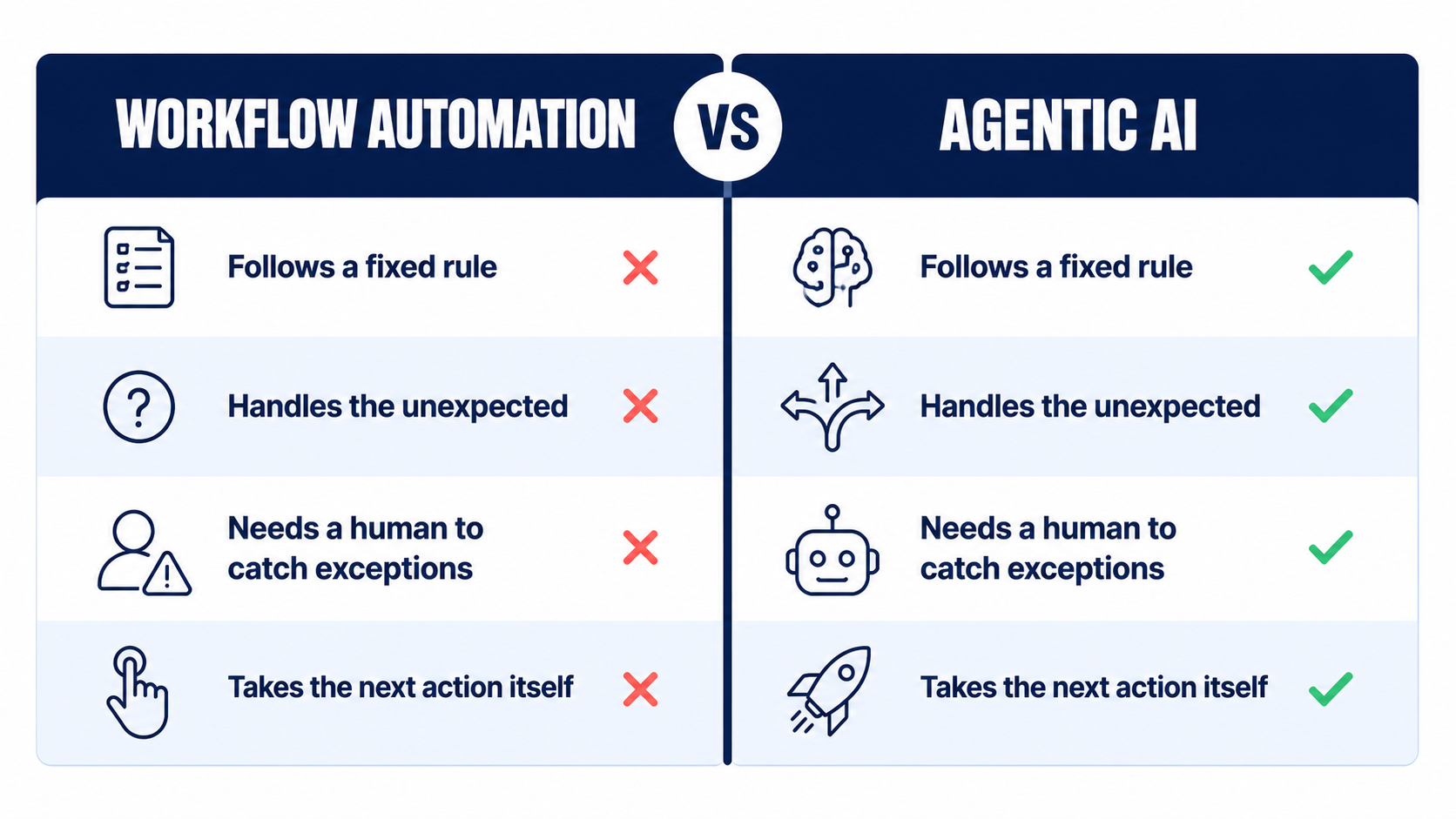
That last part is the real difference from the automation most CRMs already ship with. A workflow rule fires under exact, pre-written conditions: if loan status equals "approved," send email. Useful, but it only covers situations someone predicted in advance. An agent is built for the situations nobody wrote a rule for: a borrower sends three documents out of order, a condition gets half-satisfied, a file needs a status update that depends on judgment rather than a trigger.
Under the hood, Salesforce runs this on its Data Cloud, so an agent can pull real-time customer context, plus a reasoning layer that breaks a request into steps and decides which action to run next. None of that matters much to a broker comparing tools day to day. What matters is the move from software that reacts to software that acts, which is what "agentic AI" means in practice, not just in the marketing deck. It's a step past ordinary workflow automation, which still needs a person to notice the exception and decide what happens next.
What This Looks Like Inside a Mortgage Shop
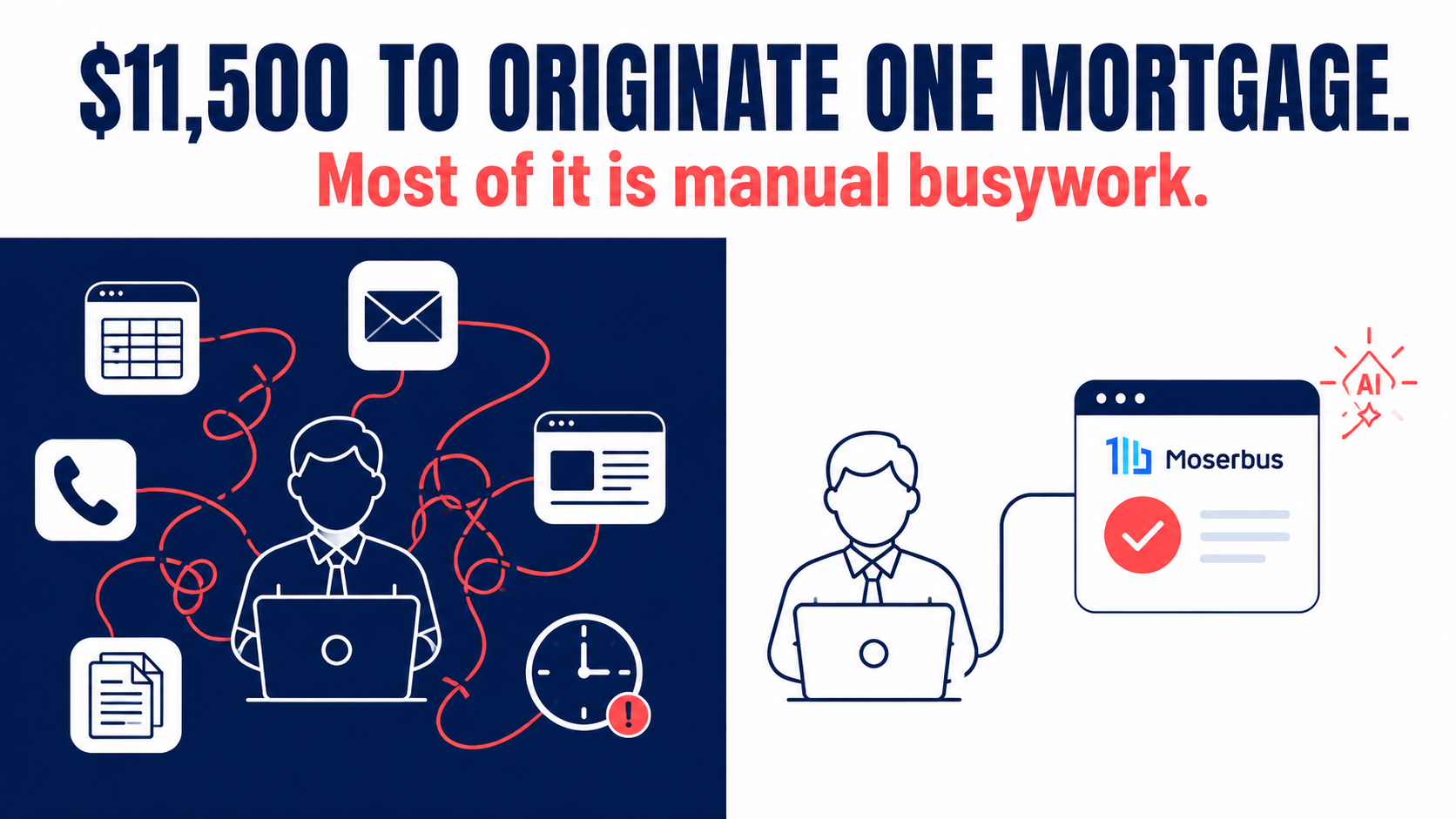
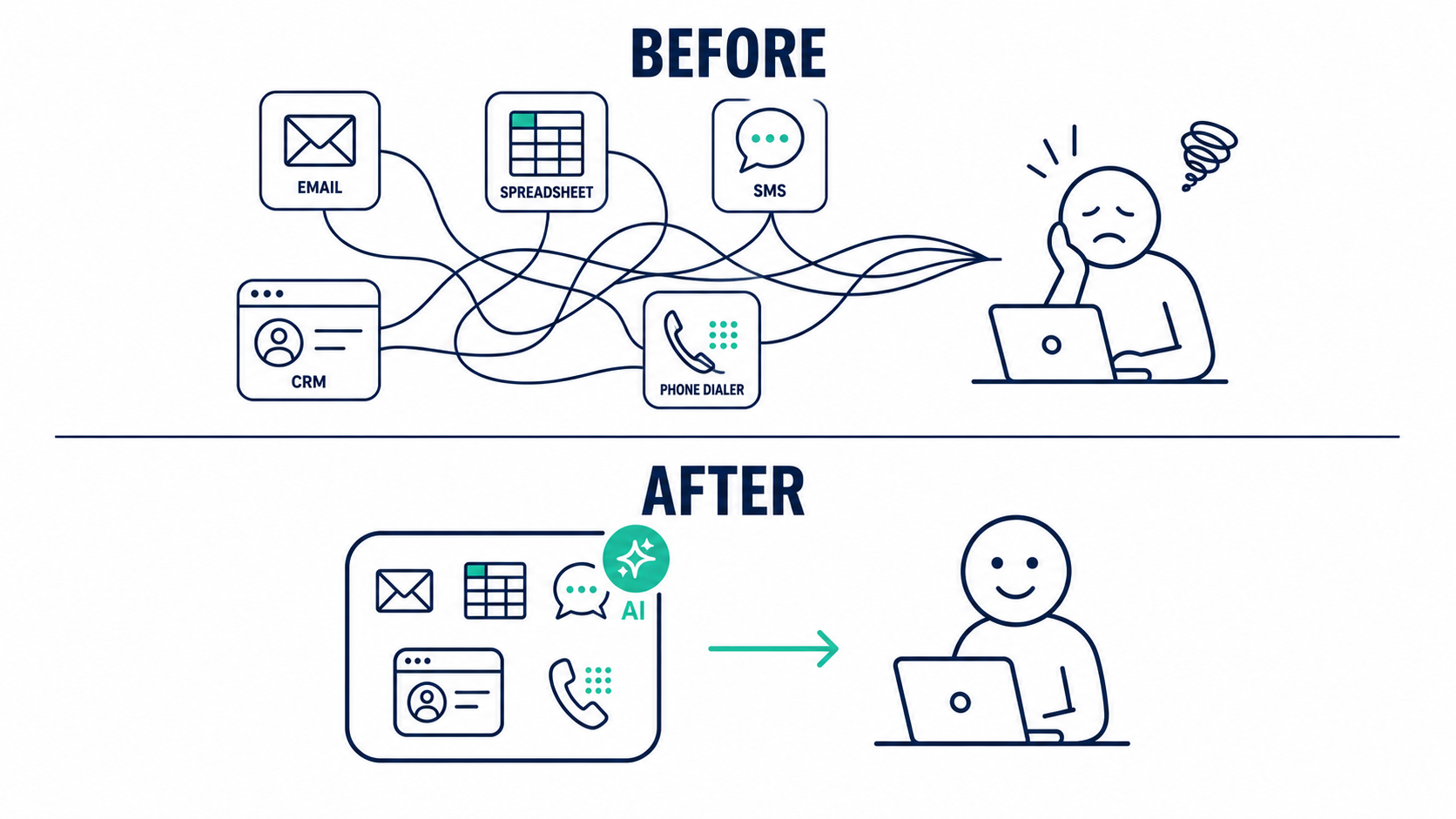
Salesforce also sells Financial Services Cloud, its mortgage-and-lending-specific layer, and in April 2026 it launched Agentforce Operations aimed squarely at back-office bottlenecks: the kind of work where someone is stuck switching between five systems, retyping data into a spreadsheet, and digging through email for a status update. That description could be lifted straight from a loan processor's job.
Geoff Green, who runs Salesforce's mortgage and lending business and previously chaired FHA transformation efforts at the U.S. Department of Housing and Urban Development, has pointed to a Freddie Mac cost study showing that originating a single mortgage still runs lenders more than $11,500 on average. His case for agentic AI isn't about cutting loan officers out of the process. It's about handing the repetitive middle of a file, chasing documents, verifying stips, drafting borrower updates, flagging conditions that are stalling a deal, to something that can actually do the chasing.
That's a compelling pitch if you're a bank big enough to run Salesforce Financial Services Cloud with a dedicated admin team. For everyone else, the more useful takeaway is what kind of CRM automation is quietly becoming table stakes.
The Part Salesforce Doesn't Advertise
Financial Services Cloud plus Agentforce is enterprise software, priced and implemented like enterprise software. Salesforce's own pricing pages point people to "contact sales" rather than a number, and real-world rollouts run for months and usually need a certified admin or consulting partner just to configure the first agent. It's built for banks and multi-state lenders, not a five-person brokerage running mortgage broker software off a laptop between showings.
A lot of independent brokers get stuck right here. Mortgage technology has always lagged behind what a broker actually needs day to day, and most mortgage automation still means email templates and reminder pop-ups, not something that can read a document and act on it. Sticking with whatever CRM you already know how to use feels like the safe choice, even when that CRM is quietly costing you closings. We wrote about that pattern in Why Traditional CRMs Fail Loan Officers: general sales CRMs don't understand loan stages or conditions, so brokers end up doing the "agent" work by hand, in a spreadsheet parked next to the CRM tab.
MoserBus was built around the same underlying idea Salesforce is now selling to enterprise lenders: a CRM that can act, not just store data. The Smart AI Chatbot inside MoserBus can create borrowers, pull pipeline reports, and navigate the app from a voice or text command. The AI Automation Builder lets you describe a workflow in plain English and it assembles the automation sequence, no admin or consultant required. That's mortgage-specific agentic CRM automation, sized and priced for a broker or small team instead of a bank.
Where Follow-Up Speed Still Decides the Deal
When a lead goes cold, it's tempting to assume the borrower just wasn't serious. More often, the honest explanation is that nobody followed up fast enough. We went deeper on that in The #1 Reason Loan Officers Lose Deals, and it's the same gap agentic tools are built to close: an agent that can draft and send a follow-up text the moment a lead goes quiet doesn't get busy, distracted, or pulled into closing a different file.
MoserBus already runs on Twilio for calls and SMS and SendGrid for email, so its automated marketing engine can act on a stalling lead the moment the pipeline flags it, instead of waiting for a person to notice.
How to Tell If a CRM Is Actually Agent-Ready
Salesforce's push into agentic AI is useful for one thing beyond selling Salesforce: it hands brokers a real checklist for evaluating any mortgage CRM software, including the one they already pay for.
- Does it take an action on its own, or just alert a person to take one?
- Can you describe a workflow in plain language and have the system build it, instead of configuring it field by field?
- Does it connect to the communication tools you actually use, so a follow-up doesn't require a separate SMS app?
- Can it read a document and act on what's inside it, instead of just storing the file?
That last question matters more than it sounds. A loan origination system and a CRM solve different problems (we broke down that distinction in What Is a Loan Origination System?), and the agentic layer usually belongs in the CRM, because that's where the borrower relationship and the follow-up cadence actually live. If you're comparison-shopping, our rundown of Best Mortgage CRM Software in 2026 breaks down which platforms have real automation and which just have workflow rules with better marketing copy.
Common Questions About Agentforce and Mortgage CRM Automation
Is Salesforce Agentforce a mortgage CRM?
No. Agentforce is an AI agent layer that sits on top of Salesforce products, including Financial Services Cloud, which is what Salesforce sells specifically to banks and lenders. It isn't a standalone mortgage CRM on its own.
Do I need Salesforce to use AI agents in my mortgage workflow?
No. Salesforce popularized the term, but the underlying idea, a CRM that can take action instead of just storing data, already exists in mortgage-specific platforms like MoserBus, at a fraction of the cost and setup time.
What's the real difference between CRM automation and agentic AI?
Traditional automation runs a fixed rule when a specific condition is met. Agentic AI reads the context of a situation, makes a judgment call, takes the action, and escalates to a person only when it hits something it can't resolve on its own.
Is any of this worth paying attention to for a small brokerage?
Yes, because it's setting the new baseline for what "modern CRM" means. Enterprise lenders are already automating the exact tasks, document chasing, status updates, condition follow-up, that eat a broker's day. Platforms built for smaller teams are catching up fast, so it's worth checking whether your current CRM does any of this yet.
The Takeaway for Brokers Not Running Salesforce
Agentforce is real, and Salesforce's numbers back that up. But the idea behind it, an AI layer that acts inside your CRM instead of just organizing it, isn't locked behind an enterprise contract anymore. See what that looks like inside MoserBus or schedule a quick demo to watch the AI chatbot and automation builder run on an actual mortgage pipeline.